The vagus is not merely a calming nerve. It is a body-brain state driver: a deep biological manipulator of affect, mood, social safety, defensive posture, exploratory behavior, and the felt sense of "how I am."
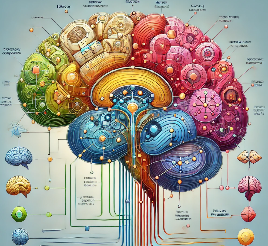
Brain-state field — cognition, affect, and body signals as one living map
I
The Long Nerve of Calm Affect
Cranial Nerve X · Rest and Digest · Meditation · Felt Safety
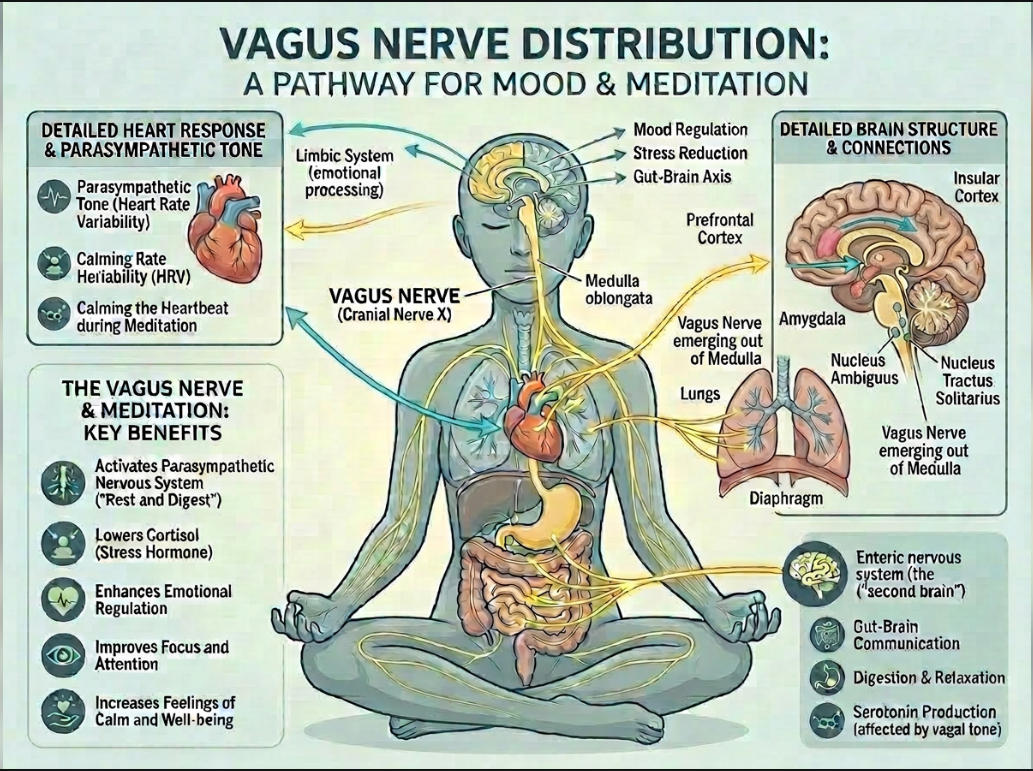
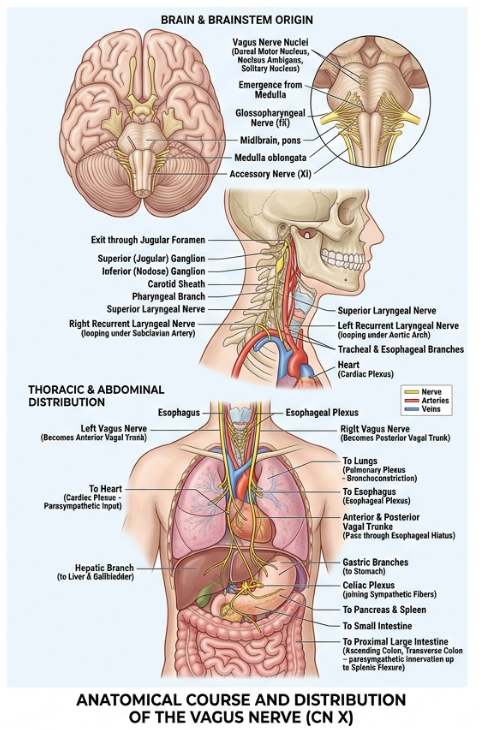
The vagus nerve, cranial nerve X, is the longest and most complex of the cranial nerves. It is the primary pathway of the parasympathetic nervous system, and a two-way communication highway between the brain and nearly every major organ.
Through this highway, the body earns its "rest and digest" state - the state that meditation, slow breath, chanting, and deep bodily stillness reliably begin to activate.
Vagus role in meditation and calm affect: the body whispers safety upward, and the mind begins to believe it.
Meditation as a body-state landscape — stillness arising from physiological regulation
II
Most Vagal Traffic Is Body → Brain
Interoception · NTS · Insula · Amygdala · Prefrontal Regulation
The overlooked fact is that most vagal fibres are afferent - they carry visceral signals upward from the body to the brain.
Body state is continuously reported: blood pressure, gut state, immune signals, breathing status, metabolic signals. This stream shapes interoception - the felt sense of "how I am."
Nucleus tractus solitarius receives vagal input.
Insular cortex maps body state into feeling.
Amygdala links body signals to emotional salience.
Prefrontal cortex helps regulate reactions.
Affect partly emerges from this loop. Mood is not just "in the head"; it is brain-body inference.
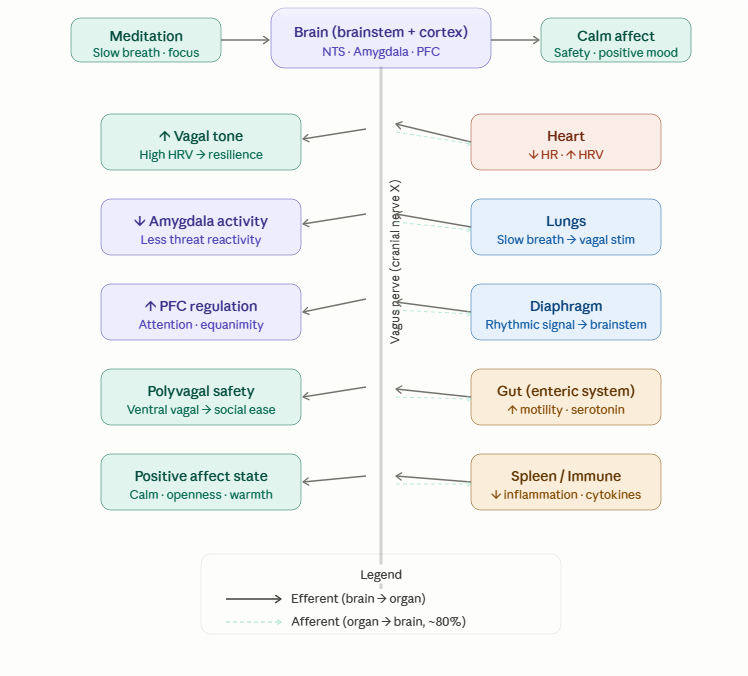
During meditation, several things happen in sequence. Slow, rhythmic breathing directly stimulates vagal afferents in the lungs and diaphragm, signalling safety to the brainstem. This triggers a cascade: heart rate drops, blood pressure eases, gut motility increases, and inflammatory signalling quiets down.
At the same time, the nucleus tractus solitarius receives this inflowing sensory data and relays calm-state signals upward toward the amygdala and prefrontal cortex - dampening threat reactivity and supporting positive affect.
The key concept is vagal tone: how readily the vagus can shift the body into parasympathetic dominance. Higher vagal tone is associated with emotional resilience, calmer resting states, and better recovery after stress.
III
Parasympathetic Outreach
Heart · Lungs · Gut · Immune Tone · Distributed Regulation
Think of the vagus as a distributed regulation system. Parasympathetic outreach is not passive "relaxation"; it is active physiological governance.
Influences breathing rhythm and supports calm respiratory states.
Gut
Supports motility, secretion, digestion, and the "rest-and-digest" condition.
Inflammation
Through the cholinergic anti-inflammatory reflex, vagal signalling can suppress excessive inflammatory responses.
Meditation-vagus feedback loop — organs, brainstem, and calm affectAnatomical course of cranial nerve X — the wide bodily reach of the vagus
A key insight is the approximate 80% afferent ratio: most vagal fibres carry signals from organs to the brain, not the other way around. Slow, controlled breathing during meditation essentially "convinces" the brain of safety by sending a continuous stream of calm-state data upward from the lungs and diaphragm.
Polyvagal theory, associated with Stephen Porges, adds another layer: vagal circuits may help support facial expressivity, vocal prosody, eye contact, social safety signalling, and attachment regulation - sometimes described as a social engagement system.
Facial expressivity.
Vocal prosody.
Eye contact.
Social safety signalling.
Attachment regulation.
This links parasympathetic physiology to behavior and even to felt safety. Meditation may therefore feel not only calm, but open, warm, and socially connected - even in solitude.
Over sustained practice, the baseline physiology can shift: resting HRV rises, inflammatory markers such as IL-6 and TNF-α may decrease, and threat reactivity can soften. The calm behaviour associated with long-term meditators is therefore not simply a trained mental attitude, but a change in autonomic set-point written into the body through the vagus nerve.
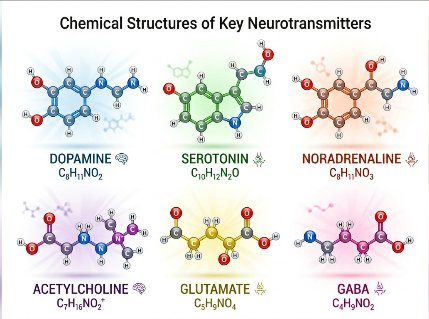
Vagal signals can influence systems involving dopamine, serotonin, and norepinephrine. In this sense, the vagus may act as a body-state editor of neuromodulatory landscapes.
Dopamine tunes motivation, reward vigour, approach, and movement toward possibility.
Serotonin shapes mood, patience, state stability, satiety, and persistence.
Norepinephrine adjusts arousal, alerting, vigilance, and readiness.
Neurotransmitter chemistry — reward, mood, arousal, and stability molecules
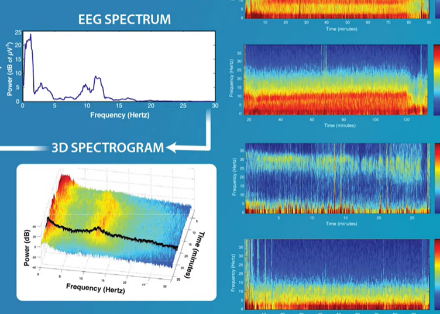
Brain rhythms — state signatures visible as changing frequency landscapesBiofeedback age — meditation, wearables, HRV, and tracked inner state
Ancient chemistry, evolving mind: once neurons appeared, these molecules became powerful tools for coordinating action.
In early nerve-net evolution, through sponge-cnidarian forms with circular shape and radial orientation, there were fewer directional vectors to worry about. Directional movement became a deeper challenge later.
With the remarkable association of apical-ANS and blastopore-BNS patterns toward the cephalic end, the hypothalamic command region could emerge as a landmark on the evolutionary highway. Exploration and exploitation of the environment became possible through the use of dopamine - to move, seek, and act.
The blastoporal system used serotonin as a neuromodulator for movement control of the coelenteron, the future digestive system. It carried the signal of satiety after energy requirement was achieved. This became a true foundation of "rest and digest" - the precursor of powerful parasympathetic drives through our much-maligned vagal networks.
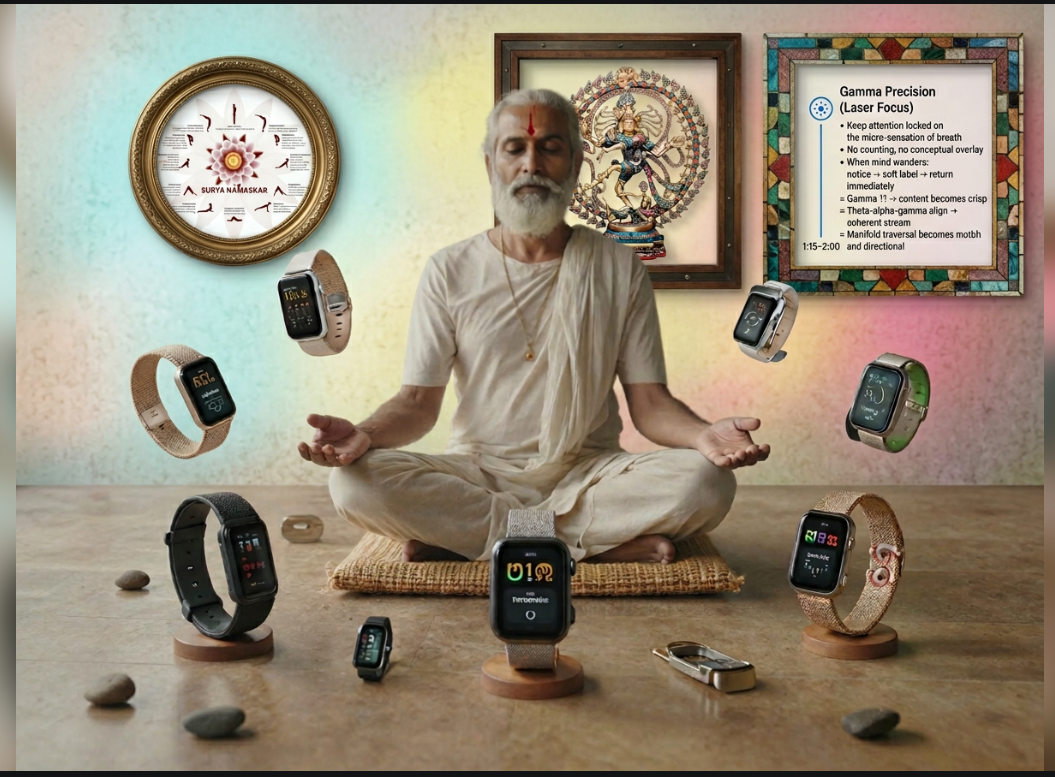
No wonder we now see an explosion of interest in parasympathetic drive: HRV through wrist bands, straps, rings, and wearable apps; affect modulation; and brain biofeedback through this body-brain route.
Meditation is one of the most effective natural ways to stimulate the vagus nerve and improve vagal tone. Ancient pranayama and modern HRV biofeedback are now pointing toward the same body-brain doorway.
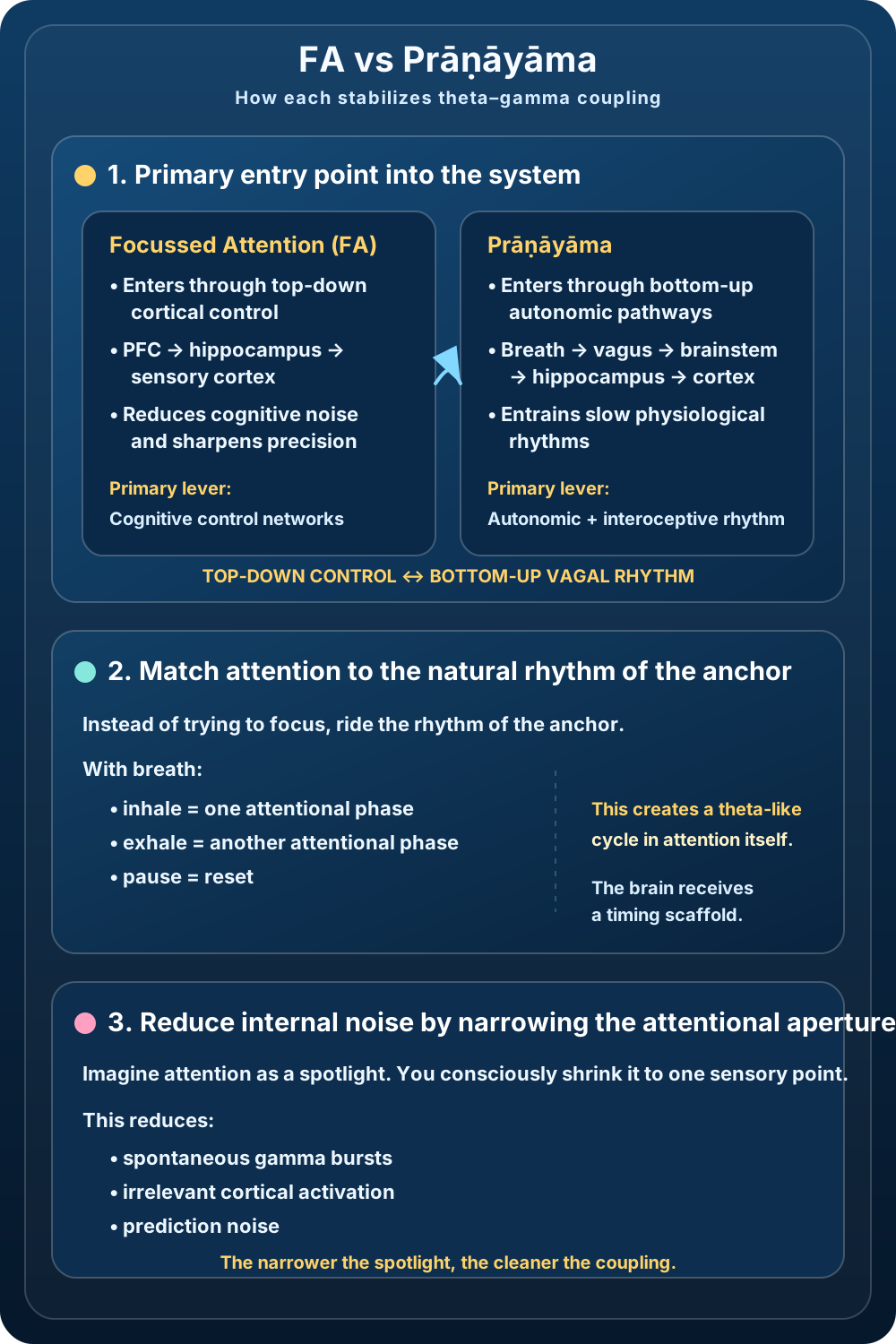
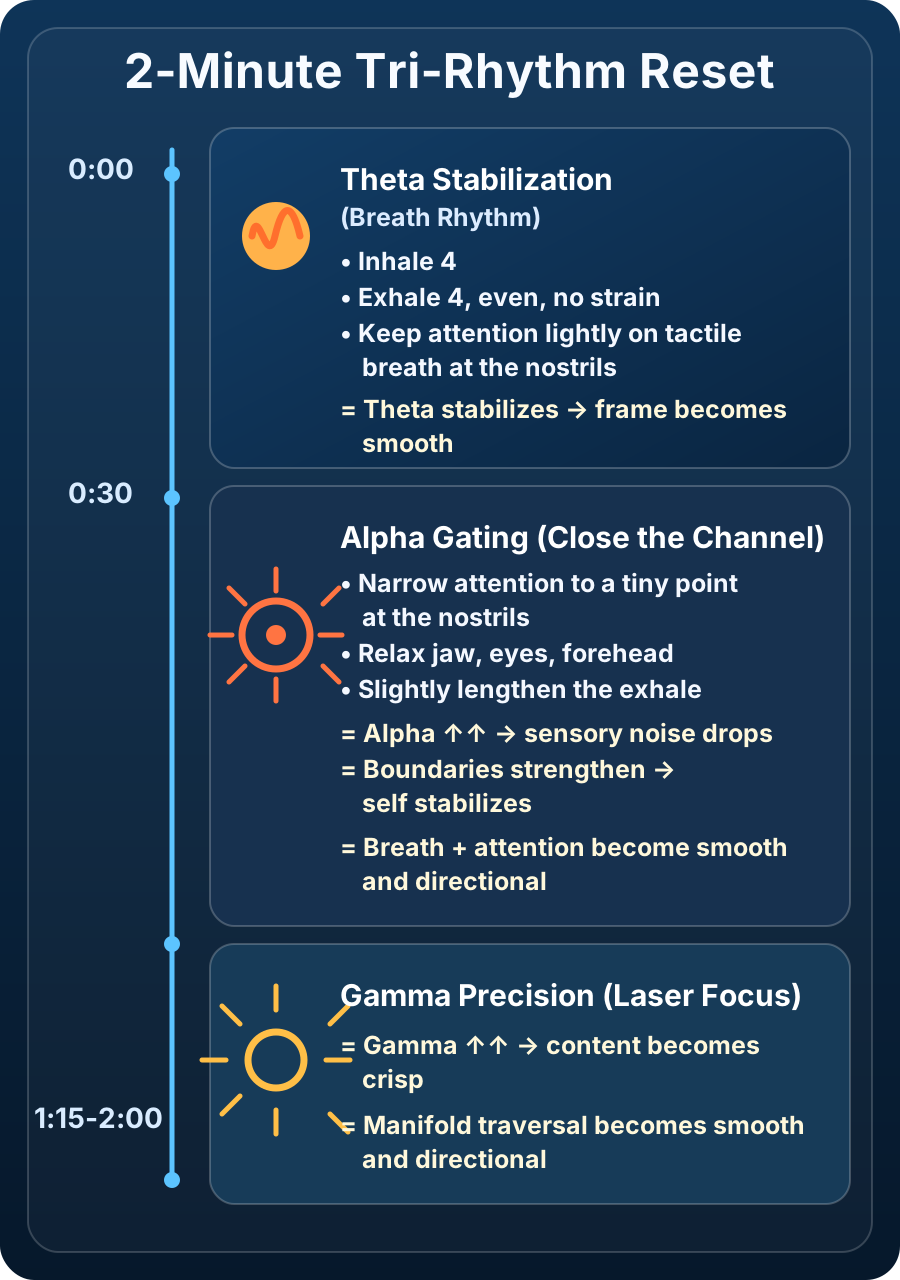
FA vs Pranayama — how each stabilizes theta-gamma couplingTwo-minute tri-rhythm reset — a practical shortcut for vagal shift and attentional control
Key ways meditation helps:
Deep, slow breathing: long, controlled breaths directly stimulate the vagus nerve and shift the body toward relaxation.
Lowering cortisol: meditation reduces stress hormones, allowing vagal function to operate more smoothly.
Increasing heart-rate variability: HRV is a sign of flexible regulation and strong vagal tone; meditation consistently improves it.
Enhancing parasympathetic activity: meditation helps the body move out of stress mode and into calm, supporting digestion, mood, and overall wellbeing.
Wearable and app-based HRV biofeedback — the current public face of vagal self-monitoring
1 · Resonant Breathing
Inhale for 5-6 seconds, exhale for 5-6 seconds. This rhythm strongly engages the vagus nerve and calms the nervous system.
2 · Diaphragmatic Breath
Deep belly breathing and longer exhalations increase vagal activation and reduce heart rate.
3 · Somatic / Heart-Focused Meditation
Breath, body awareness, and gentle visualization help regulate vagal tone and emotional state.
4 · Mindfulness
Mindfulness reduces stress reactivity and supports vagal function over time.
5 · Humming or Chanting
Vibration plus controlled exhalation stimulates vagal pathways; this is where ancient mantra and modern anatomy meet.
6 · Wearable Feedback
Rings, straps, wrist bands, and apps turn HRV into a visible signal - a modern shortcut for learning the body's calm language.
By strengthening vagal tone through meditation, people often experience reduced anxiety, improved emotional regulation, greater resilience to stress, and an enhanced sense of calm and safety.
These effects arise because the vagus nerve directly influences brain regions involved in mood and stress processing - not as an abstract idea, but as a living circuit between breath, organs, brainstem, limbic salience, and the field of consciousness.
The vagus is our most powerful driver because it moves beneath thought. It changes the body-state from which thought, affect, mood, and behavior arise.
To regulate the vagus is not merely to relax. It is to change the starting condition of consciousness.