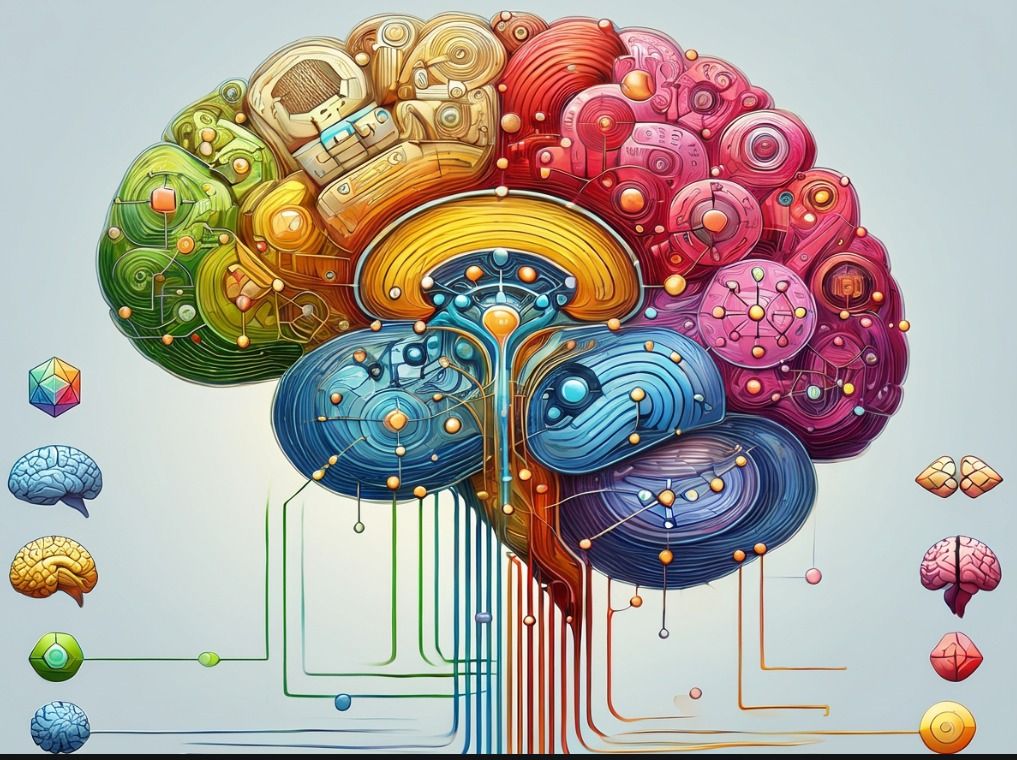
Colorful illustrated human brain for the title Our Dreaming Sleepy Brain
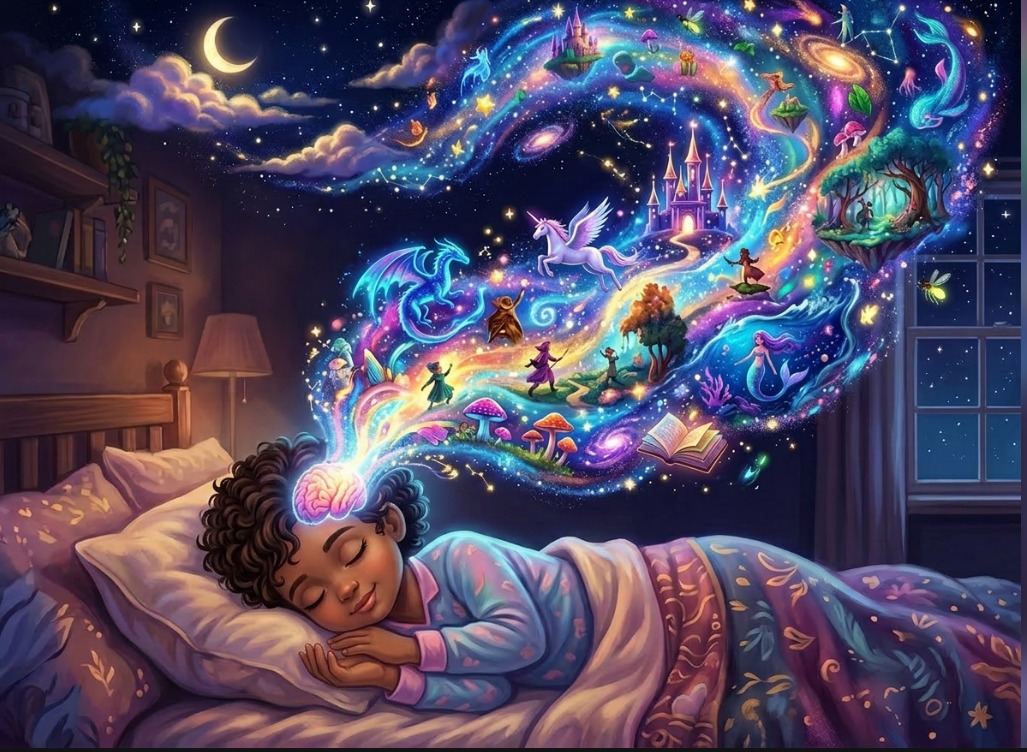
Image 0 · Our dreaming sleepy brain — the sleeping mind becomes an inward theatre of memory, emotion, prediction, and symbolic imagination.
Windows into Consciousness
Live chapter

Our Dreaming Sleepy Brain

Evolution · sleep stages · brain switches · REM · PGO waves · Freud · Jung

Sleep is not the opposite of consciousness. It is a different operating mode of consciousness — inward, gated, rhythmic, and biologically purposeful.
I

Why evolution refused to abandon sleep

Sleep is dangerous. A sleeping organism cannot search for food, defend territory, mate, run, or watch the night. From a simple survival calculation, sleep looks like a biological mistake.

Yet evolution preserved it across the animal kingdom. Insects sleep. Birds sleep. Reptiles show sleep-like states. Mammals cycle through non-REM and REM sleep. Dolphins, who cannot safely become fully unconscious in water, evolved an extraordinary compromise: one hemisphere sleeps while the other remains awake enough to breathe and swim.

This is the first conceptual clue: sleep is not idleness. If evolution retained such a vulnerable state for hundreds of millions of years, then sleep must be doing work that waking life cannot do efficiently.

Sleep is the brain’s protected maintenance window. During waking, the nervous system must remain open to the world. During sleep, it can close the gates, change chemistry, weaken external input, replay memory, clear waste, recalibrate emotion, and generate internal simulations.

Bridge line: Sleep is therefore not the opposite of consciousness. It is a different operating mode of consciousness — inward, gated, rhythmic, and biologically purposeful.
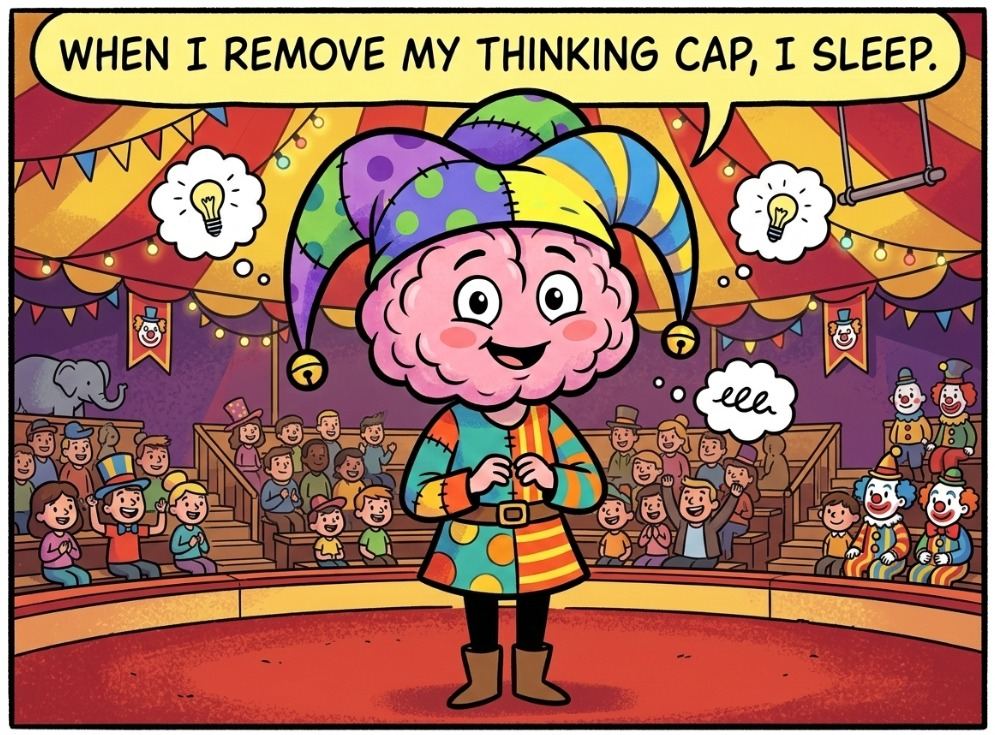
Playful brain character in a circus with the phrase when I remove my thinking cap I sleep
Image 3 · Removing the thinking cap — the waking brain steps back from active performance and begins the inward transition into sleep.
II

The night is built in stages, not as one uniform darkness

Human sleep is organized into repeating cycles of about 90 minutes. Across a normal night, we pass through light NREM sleep, deeper NREM sleep, slow-wave sleep, and REM sleep, then the loop begins again.

Early night is dominated by slow-wave sleep. Later night is dominated by REM. This is why losing the last two hours of sleep does not merely shorten sleep; it selectively removes much of the night’s dream-rich REM period.

N1 — the threshold

N1 is the fading border between waking and sleep. External attention loosens, thoughts become fragmentary, and brief dreamlike images may appear. The brain is beginning to release the world.

N2 — sensory gating and spindles

N2 is the most common stage of sleep. The thalamus begins to gate incoming sensory signals. Sleep spindles appear — short bursts that help protect sleep from disturbance and support memory processing.

N3 / slow-wave sleep — deep maintenance

Slow-wave sleep is the deepest non-REM state. Cortical neurons pulse in large synchronized rhythms. This is the time of strong body restoration, immune support, growth-hormone release, hippocampal memory replay, and glymphatic waste clearance.

REM — vivid internal world

REM sleep is paradoxical. The body is largely paralyzed, yet the brain is metabolically active. The eyes move rapidly, the pons ignites internal signals, the visual system becomes active, the amygdala becomes emotionally intense, and the prefrontal referee becomes quieter. This is the main stage for vivid narrative dreaming.

Table 1 · The architecture of one night
StageWhat changesWhy it matters
N1Waking attention loosens; fragmentary images begin.The brain crosses the threshold into inward consciousness.
N2Thalamic gating and sleep spindles protect sleep.Memory processing begins while the outside world is softened.
N3 / slow waveLarge synchronized cortical rhythms dominate.Deep restoration, immune support, replay, and cleaning.
REMActive brain, quiet body, vivid visual-emotional scenes.Dream-rich simulation and emotional recombination.
losing late sleep selectively cuts away much of the night’s REM-rich dreaming period.
III

The ON–OFF switch: sleep is actively produced

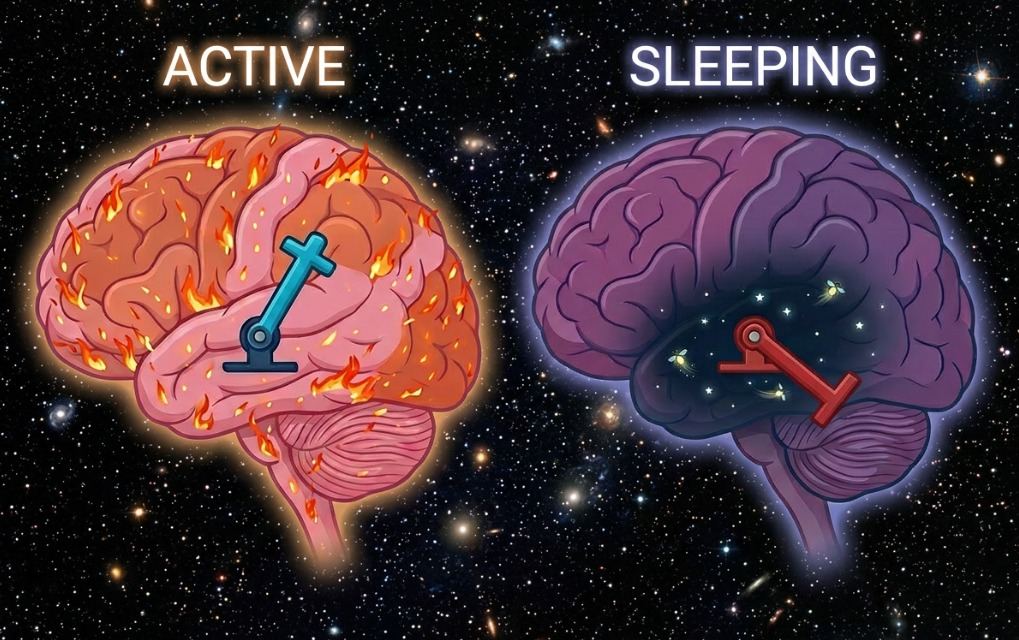
Sleep does not simply happen because the brain “runs out of energy.” It is actively produced by a switch-like circuit.

At the center is the VLPO in the hypothalamus. When the VLPO wins, it releases GABA and galanin that inhibit the arousal centers. Those arousal centers include the locus coeruleus, dorsal raphe, tuberomammillary nucleus, basal forebrain, and lateral hypothalamus. During waking, these centers hold the brain in alert mode. During sleep, they are suppressed.

This is a mutual inhibition system — a biological flip-flop. Wake centers inhibit sleep centers; sleep centers inhibit wake centers. The middle state is unstable. That is why drowsiness can suddenly tip into sleep, and why microsleeps can arrive without warning.

Two major forces push the switch:

  • Process S: sleep pressure rises as adenosine accumulates during waking.
  • Process C: the circadian clock, led by the suprachiasmatic nucleus, dims wakefulness at the correct biological time.

Orexin from the lateral hypothalamus stabilizes waking. When orexin signaling fails, as in narcolepsy, the switch becomes unstable and REM-like features can intrude into waking life.

Diagram of sleep and wake ON-OFF switch showing VLPO, arousal systems, orexin, sleep pressure, and circadian input
Image 2 · Sleep/wake ON–OFF switch — VLPO sleep drive and arousal nuclei hold each other in mutual inhibition until pressure and circadian timing tip the state.
Table 2 · The active sleep switch
DriverMain biologyFunctional meaning
VLPO winsGABA and galanin inhibit arousal nuclei.Sleep is produced actively, not passively.
Wake centers winLocus coeruleus, raphe, TMN, basal forebrain, lateral hypothalamus keep arousal high.The brain remains open to the outside world.
Process SAdenosine-linked sleep pressure rises with waking.The longer we stay awake, the stronger sleep pressure becomes.
Process CSCN circadian timing gates the right biological time.Sleep pressure is aligned with night and body rhythm.
the unstable middle explains sudden drowsiness, microsleeps, and REM-like intrusions when orexin stability fails.
IV

What the sleeping brain is doing

Once sleep begins, the brain does not shut down. It changes tasks.

1. Thalamic gating

The thalamus reduces the flow of external sensory information to the cortex. Consciousness is not erased; it is shielded from the outside world.

2. The sleep trident of memory consolidation

During slow-wave sleep, three rhythms coordinate memory transfer:

  • cortical slow oscillations,
  • thalamic sleep spindles,
  • hippocampal sharp-wave ripples.

Together they form a timed handshake. New memories stored temporarily in the hippocampus are replayed and gradually integrated into cortical networks.

3. Glymphatic clearance

During deep sleep, interstitial space in the brain expands and cerebrospinal fluid more effectively clears metabolic waste, including amyloid-β and tau-related products. Sleep is therefore also a cleaning state, not only a cognitive state.

4. Synaptic recalibration

Waking strengthens many synapses. Sleep helps renormalize and prune, preserving important learning while reducing noise and metabolic burden.

5. Emotional recalibration

REM sleep brings emotional memory back into an altered chemical environment. Noradrenaline is low, while limbic regions such as the amygdala are highly active. The brain can revisit emotional material without the exact waking chemistry of alarm.

V

REM prepares the stage for dreams

REM sleep is not random brain noise. It has a recognizable architecture.

The pons becomes a key initiator. Signals known as PGO waves — ponto-geniculo-occipital waves — begin in the pons, pass through the lateral geniculate nucleus of the thalamus, and reach the occipital visual cortex.

From the point of view of the visual cortex, these internal volleys can look like real visual input. The brain’s visual machinery was built to interpret signals, not to ask whether the signal came from the outside world or from the pons.

This is why dreams feel seen, not merely thought.

At the same time, REM produces muscle atonia. The motor system may simulate action, running, grasping, falling, fighting, or flying, but spinal motor output is suppressed. The dreamer moves inside the dream while the body remains still.

Dreamlike REM sleep visual anchor showing a sleeping figure and vivid inner imagery
Image 1 · REM dreaming as inner visual ignition — the sleeping body remains still while the brain opens a private world.
VI

How a dream is constructed step by step

A dream is built bottom-up, not top-down.

  1. PGO ignition: the pons sends internally generated volleys toward visual pathways.
  2. Visual rendering: occipital cortex begins to create scenes, shapes, movement, and light.
  3. Object and face recognition: temporal cortex gives identity — people, animals, rooms, roads, objects.
  4. Memory recruitment: hippocampal networks bring fragments from recent and older memory.
  5. Spatial scaffolding: parietal systems help arrange a navigable dream space.
  6. Emotional colouring: the amygdala and limbic system mark the scene with fear, longing, urgency, shame, desire, or wonder.
  7. Motor simulation: motor circuits prepare dream action while the body remains inhibited.
  8. Reduced executive correction: the prefrontal cortex is less active, so contradictions are tolerated. The impossible feels acceptable.

The brain is always creating its predictions during the awake, alert state, and its functional energy resources are nearly overwhelmed and exhausted by never-ending predictive processing. It is always bombarding as constrained predictions, from the top down, the thalamic gate and the working-memory tarmac, trying to manipulate real-world sensory relay signals. It is always fighting, though sometimes losing, against the recognition mode of bottom-up relay signals, trying to impose its own narrative. This particular ability has almost no opposition when sleep begins; therefore this powerful, magical predictive-processing force can drive helpless brain regions during sleep into unopposed hallucinating dreams — abstract, uncensored, and unedited narratives. Dreams are possibly the result of that.

This explains the special logic of dreams. A dead person can appear alive. A childhood house can contain a present-day office. A stranger can feel like a relative. The dream does not obey waking logic because the brain regions that normally demand consistency are partly offline.

Table 3 · Dream construction and meaning
LayerBrain processDream experience
IgnitionPGO waves begin in the pons and reach visual pathways.The inner world starts to look seen.
Scene buildingOccipital, temporal, hippocampal, and parietal systems assemble imagery, identity, memory, and space.Fragments become people, places, rooms, journeys, and events.
EmotionAmygdala and limbic circuits mark the scene with urgency or feeling.The dream feels meaningful even when it is illogical.
Reduced correctionPrefrontal consistency checks are quieter.Contradictions are tolerated; impossibility feels natural.
Freud gives conflict, Jung gives symbolic integration, and neuroscience gives the REM machinery that lets both appear inside experience.
VII

How current behavior enters dreams

Dreams are not detached from daily life. Current behavior enters through several doors.

The first door is day residue. Recent conversations, anxieties, images, conflicts, and unfinished tasks appear in disguised or fragmentary form.

The second door is emotional salience. The amygdala gives priority to what matters emotionally. This is why dreams often exaggerate pursuit, threat, embarrassment, desire, loss, or social tension.

The third door is memory recombination. The hippocampus does not replay life like a video recorder. It recombines fragments — a person from today, a place from childhood, a fear from the future, a bodily sensation from the present bed.

The fourth door is bodily state. Fever, pain, breath difficulty, hunger, bladder pressure, medication, alcohol, and sleep position can all become dream material. The sleeping brain interprets internal signals and weaves them into story.

The dream is therefore a living meeting point: recent behavior, old memory, body state, and emotional priority are stitched together inside REM architecture.

VIII

Why dream at all?

Dreaming may serve several overlapping purposes.

Emotional rehearsal
The brain simulates threat, loss, social conflict, and desire in a protected internal theatre.
Memory integration
New experiences are linked with older knowledge, sometimes producing insight or creativity.
Affective digestion
Emotionally charged memories are revisited, altered, and placed into broader context.
Predictive simulation
The brain tests possible futures without needing to act in the world.

It may also be a form of self-updating. The dream shows what is unresolved, feared, wished, avoided, or still becoming meaningful.

Dreams are not always wise, but they are rarely meaningless. They are the brain’s nightly experiment in self, memory, emotion, and possibility.

IX

Freud: dream as disguised wish and conflict

Sigmund Freud placed dreams at the center of psychological life. For Freud, the dream was the “royal road” to the unconscious.

He argued that dreams transform unacceptable wishes, conflicts, and anxieties into disguised symbolic form. The remembered dream — the manifest content — hides a deeper latent content. Through condensation, displacement, and symbolism, forbidden or painful material can enter consciousness indirectly.

Modern neuroscience does not accept every Freudian claim literally. Yet Freud’s central intuition remains important: dreams are not random surface images. They are linked to desire, conflict, repression, anxiety, and the hidden pressures of the self.

In the language of this chapter, Freud noticed the psychological meaning of a brain state in which emotional systems are active, memory is fluid, and the rational censor is weakened.

X

Carl Jung: dream as symbol, compensation, and individuation

Carl Jung widened the dream beyond wish fulfillment. For Jung, dreams are symbolic communications from the unconscious, often compensating for one-sidedness in waking life.

If waking consciousness becomes too rigid, the dream may bring an opposite image. If the ego ignores grief, shadow, creativity, or spiritual hunger, the dream may stage these neglected forces symbolically.

Jung also emphasized archetypal patterns — mother, child, shadow, wise elder, journey, death, rebirth — not as fixed dictionary meanings, but as recurring forms of human psychic life.

In this view, the dream is not merely a disguised wish. It is an image-making process by which the psyche tries to restore balance and move toward wholeness.

Freud gives us conflict. Jung gives us symbolic integration. Neuroscience gives us REM circuitry, PGO ignition, limbic activation, memory recombination, and prefrontal loosening. Together they suggest that dreaming is both biological and meaningful.

XI

Closing: sleep as the inward window

Sleep is one of the deepest windows into consciousness because it shows consciousness without ordinary external control.

In slow-wave sleep, the brain cleans, consolidates, and restores. In REM sleep, it ignites an inner theatre. The body is still, but the self moves. The eyes are closed, but visual worlds appear. The prefrontal judge is quiet, but emotion and memory speak loudly.

Sleep is not the failure of waking. It is the condition that makes waking possible.

And dreams are not merely night stories. They are the mind’s secret laboratory — where evolution, brainstem rhythm, memory, emotion, body state, and symbolic self-understanding meet.

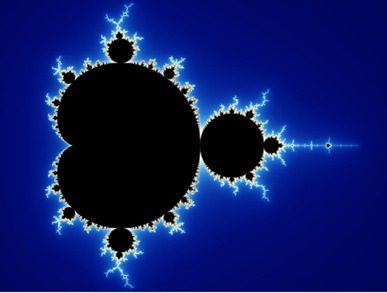
Blue Mandelbrot fractal suggesting the infinite depth of dreams and the unconscious mind
Final image · Into the infinite — where the sparks of dreams meet the depth of the unconscious.