ANGER... OUR DRAGON... AMYGDALA
Our primal emotions are few, like Happy, Sad, Fear, Anger... and of course all these are driven at the very crux by ‘Rewards as logic’. Our basic binary choices of approach rewards or avoid any harm guide our interactions around all available options in the surrounding environment.
Our interoceptive networks construct all our emotions. Their purpose is to guide the management of energy body budgets and maintain hemostasis by Hypothalamus. Emotions are internal drives exerting powerful effects on our behavioral action choices. Ancient mechanisms for survival developed with early evolutionary drives.
Happy state is positive rewards for goal accomplished, Sad state signifies negative experience of life-changing punishment, Fear is to survive safely and avoid harm, whereas Anger is frustration of blocked goals. Negative events where we do not know what happened lead to fear. But where we know the cause, and that explains why it occurred, it ignites ‘ANGER’ as sensed apparent injustice, and leads a dirty quick reflex at Amygdala.
Anger as a stabilized attractor
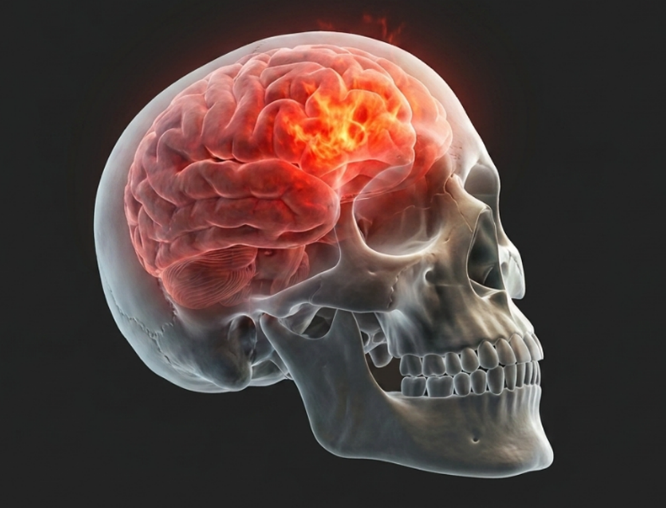
ANGER IS... NOT ONLY A LIMBIC OUTBURST: ANGER IS... A STABILIZED ATTRACTOR. It becomes a whole-brain state only when it is broadcast and recursively reinforced. Anger behaves like a state transition in a neural attractor landscape, where Amygdala is a fast attractor switch trigger. Hypothalamus/PAG is the deep basin stabilization, action lock-on, and PFC is the injected conscious effort, energy to escape the basin. When regulation fails, the system falls into a self-reinforcing anger attractor loop: body arousal > interoception > threat reinterpretation > more amygdala drive.
This is what leads to assignment of emotional salience as a pattern-match of something being wrong in the thalamo-amygdala route, then referred to hypothalamus, organizing aggressive defensive behaviors and driving autonomic activation of heart rate and blood pressure changes.
Reactive mode is hot, impulsive, fast, and automatic. It follows from hypothalamus to PAG, the peri-aqueductal gray zone, and also the brainstem broadcast of arousal from reticular activity via thalamic intralaminar nuclei and body activation. Till now it is under weak PFC (pre-frontal) control. It follows Insula + ACC, leading to subjective anger, and conflict identified by anterior cingulate cortex.
Strong prefrontal involvement causes a dampened response, a cold anger that is goal-directed for revenge, dominance, or punishment.
Why anger becomes global
1. So Anger is a stabilized attractor with subcortical attractor minimal loop of Amygdala, hypothalamus, and periaqueductal gray to create rage, autonomic surge, and motor aggression.
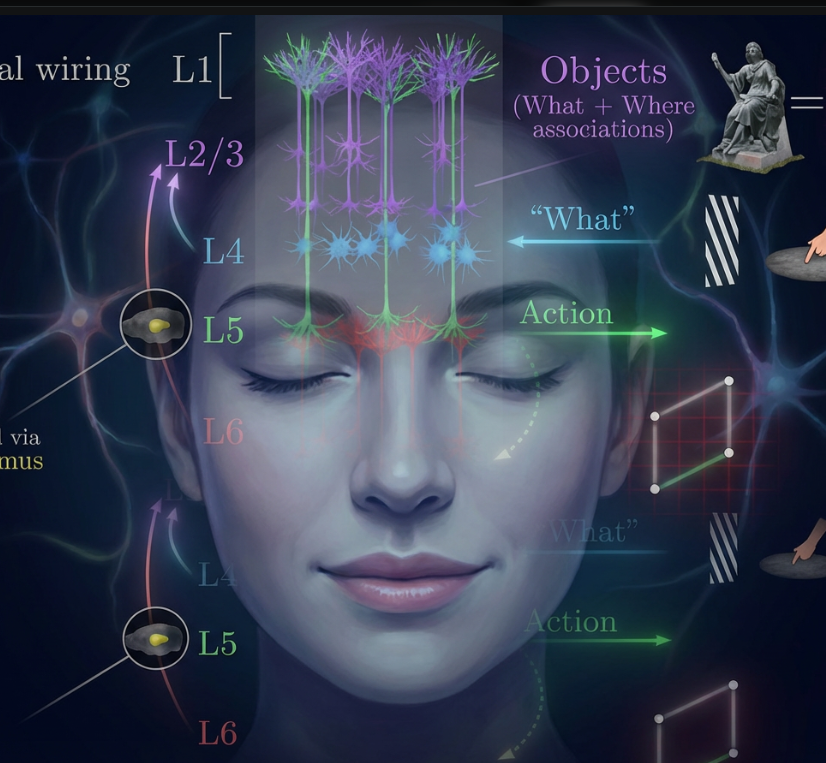
2. Thalamic broadcasting makes anger global, as specific thalamic nuclei do not carry any context. They just broadcast state signals globally, and also synchronize large cortical territories, especially via layer L1 of cortical columns. This locks multiple cortical regions in the same emotional frame. IT BECOMES: I am Angry, instead of something triggered a reaction.
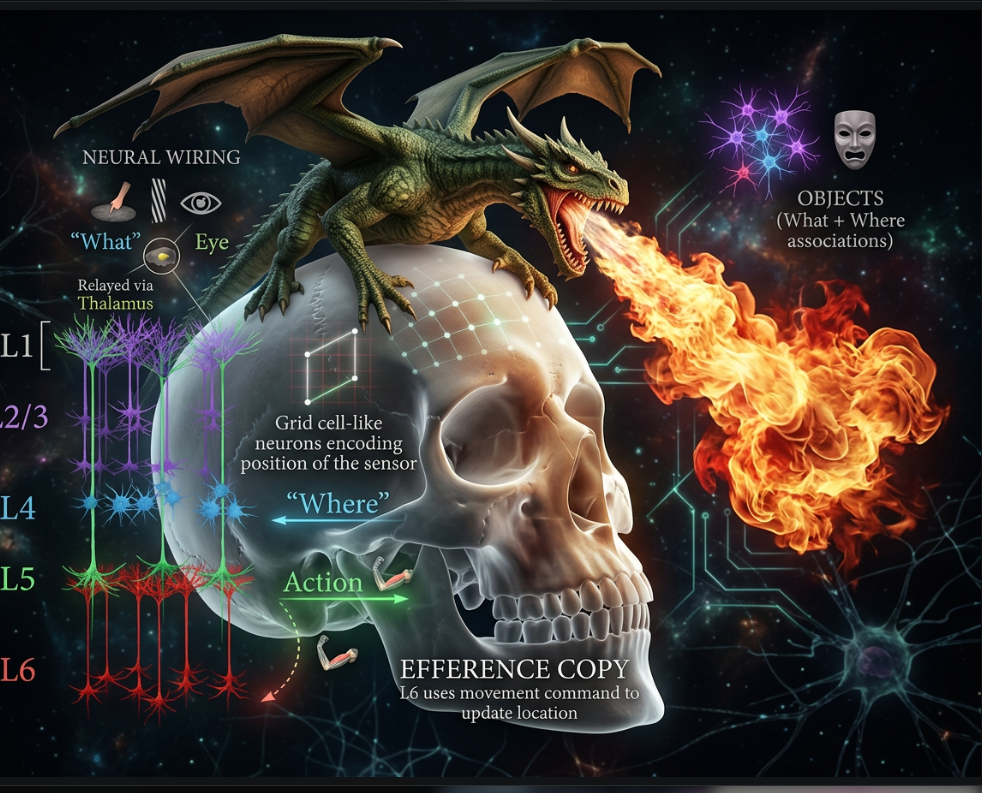
Cortical embedding constructs a narrative. Insula > my body is burning. ACC > this is wrong / unfair. PFC > justification, where DMN > creates a self-story: They did this to me.
NOW ANGER is a MULTILAYERED ATTRACTOR where all this feedback goes again to amygdala and reinforces the threat interpretation.
Escape vs locked-in dynamics
Lock-in runaway anger occurs when loops involve cortex re-triggering amygdala, and amygdala keeps re-biasing cortex.
So the ESCAPE from ANGER, regulation, requires adding “energy to push system out of basin” by reappraisal, attentional shift, and interoceptive reinterpretation.
BREAKING THE LOOP is not about suppressing one node of amygdala, but about DECOUPLING the TC LOOPS, the thalamocortical attractor, so it cannot re-stabilize itself.
Interrupt the loop at multiple levels, so it loses coherence and collapses.
THREE LEVERS to break the body-state and shallow the basin from below.
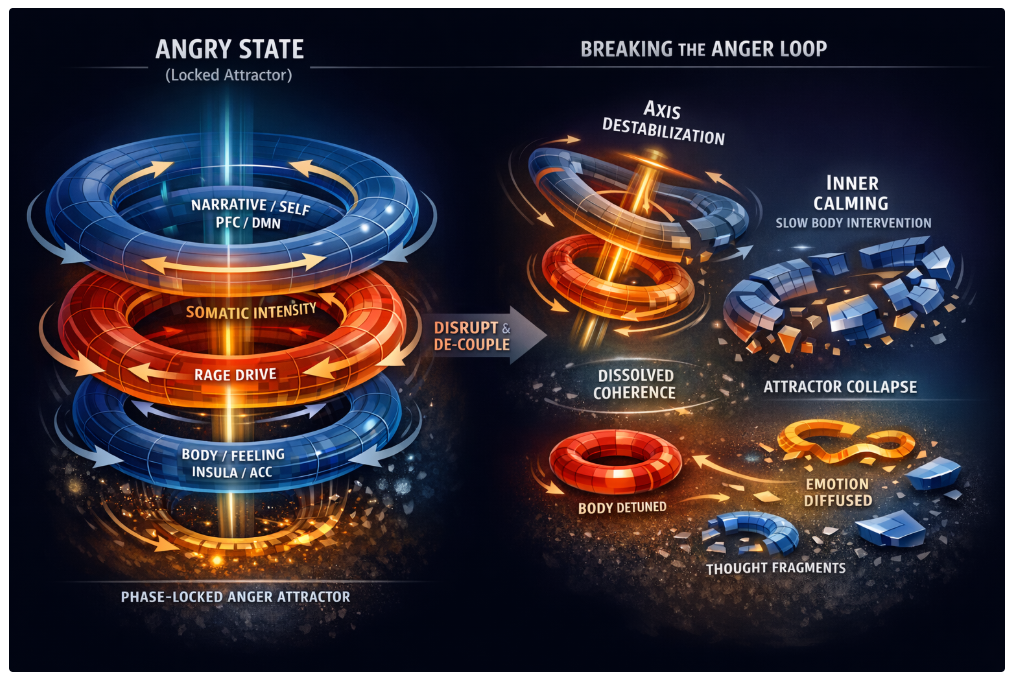
A. EMOTIONAL AMPLIFICATION. Target insula and hypothalamus. If body calms down, the loop loses fuel. Slow breathing, long exhale > inhale, cold water on face, postural release, unclench jaw, relax shoulders. This reduces autonomic output from hypothalamus, and weakens insular signals (“this is intense”), which then dampens the intolerable perception to manageable levels.
B. DISRUPT THALAMIC BROADCASTING LOOPS. Desynchronize the intralaminar thalamic nuclei causing global coherence. This can be done by shifting attention to a neutral sensory detail, textures or sounds, rapid context switching like a brisk walk or a change of environment, or even DUAL TASKING, counting plus movements. This competes for thalamic bandwidth and thereby reduces coherent cortical entrainment.
C. ADDITIONAL INJECTION OF COMPETING INTERPRETATIONS. Targeting PFC means: JUST CHANGE THE LANDSCAPE. Not only positive thinking, but questions like, what else could explain the cause of this anger? Will this still matter after 24 hours? How would a third-party observer react to the same cause?
SO WHENEVER ANGER RISES:
Anger regulation is done by preventing global phase-lock across systems.
Counter-measures can be immediately taken to reduce amygdala gain, disrupt ILN thalamic broadcast, and re-engage PFC, the prefrontal cortex.
Step 1 · Body first
5 – 10 slow exhalation breaths.
Step 2 · Break coherence
Look around. NAME at least FIVE – 5 – neutral objects.
Step 3 · Insert one alternative frame
“There is at least one, another, alternative explanation.”
It is: DE-SYNCHRONIZE >>> DE-AMPLIFY >>> REFRAME... in that order.